

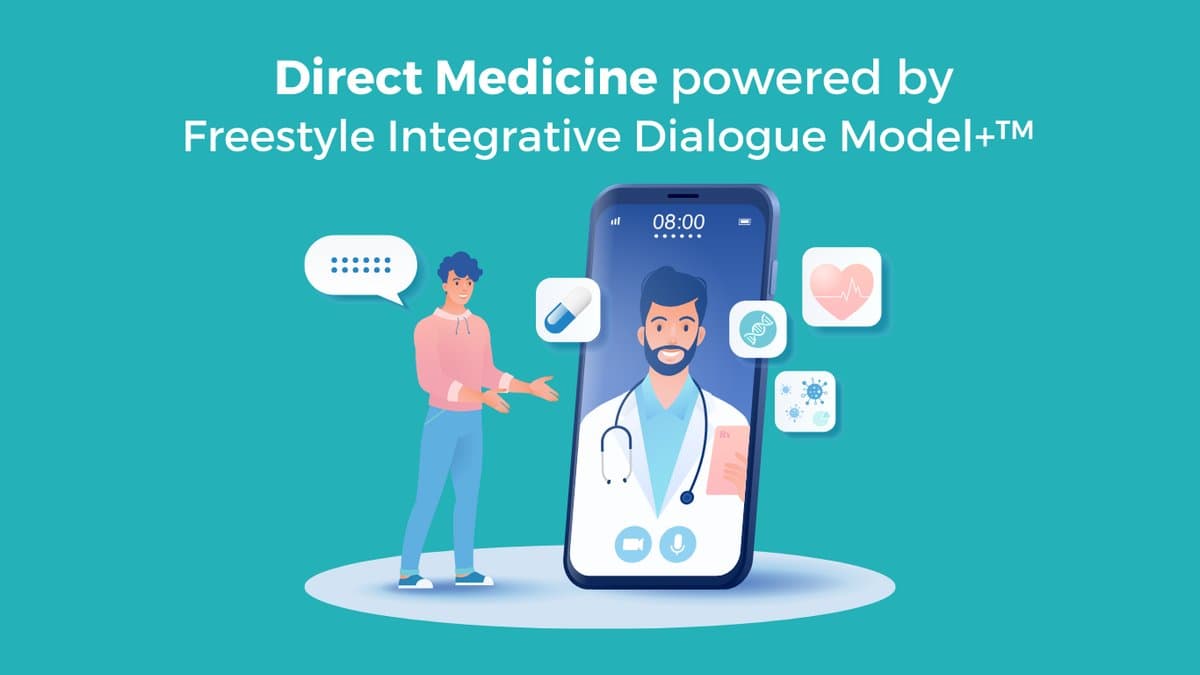
A Florida-based integrative care practice is challenging conventional healthcare delivery with a model that prioritizes clinical structure, patient privacy, and accessible pricing through a nationwide telehealth platform.
Freestyle Healing has moved away from traditional annual pricing models in favor of a monthly membership approach designed to reduce financial barriers while maintaining high-touch, integrative care. The shift reflects broader concerns about access in preventive medicine, where specialized attention often comes with pricing that limits patient diversity.
The practice addresses conditions that frequently send patients to online searches and expensive trial-and-error solutions: metabolic dysfunction including weight gain and insulin resistance, chronic fatigue, sleep disruption, stress overload, digestive complaints, hormone and thyroid-related symptoms, migraines, chronic pain patterns, and early prevention strategies. Rather than offering fragmented wellness advice, the clinical model provides structured plans organized across nutrition, lifestyle, sleep, movement, supplements, and coordination with other providers when needed.
At the center of the practice's approach is the Freestyle Integrative Dialogue Model Plus, or FIDM+, a clinician-led framework developed by Dr. Jaydee Robles over years of clinical practice and interdisciplinary training. The framework was designed to transform complex patient narratives into organized care plans while keeping human judgment at the center of every decision.
FIDM+ was developed in part through an Opportunities for All grant awarded by the Greater Sarasota Chamber of Commerce in 2021, which provided time and resources for research and early structuring. The framework addresses what Dr. Robles identified as persistent ethical barriers in digital health: black-box recommendations with unclear accountability, overcollection of sensitive information, and data use that benefits companies more than patients.
The system functions as what the practice describes as an organizing intelligence—a tool that supports providers by standardizing intake processes, improving documentation clarity, and making patient goals visible throughout care delivery. It supports patients by producing plans that are readable, realistic, and grounded in individual circumstances rather than diagnosis labels alone.
Privacy architecture distinguishes the practice from many digital health offerings. The workflow emphasizes structured data collection, need-to-know documentation, and protective handling of sensitive information. The design aims to minimize oversharing while capturing clinically relevant details, reducing exposure risk for patients and documentation liability for providers.
The practice operates on a human-in-the-loop model, meaning technology supports clinical reasoning and documentation but does not replace clinician judgment or patient choice. Decision support incorporates reputable reference material and current best-practice guidance where appropriate, but final accountability remains with the provider.

Dr. Robles comes from a family of medical professionals and combines training in Eastern and Western medicine to deliver research-driven care. He holds telehealth licensure in Florida, Utah, New Mexico, Maine, Rhode Island, Minnesota, Louisiana, Oklahoma, Colorado, Nevada, California, Arkansas, and Idaho, and is fluent in English and Spanish. Freestyle Healing is recognized as a minority-owned business and has been featured in local media and professional outlets. Dr. Robles has also been recognized for advocacy work supporting complementary and alternative healthcare legislation and was named Acupuncturist of the Month, though current services focus on telehealth nutrition, lifestyle planning, and lab-guided wellness rather than acupuncture.
The membership model eliminates common friction points in healthcare delivery: waiting rooms, commute requirements, rushed appointments, and unclear communication. Patients receive on-time appointments, plain-language explanations, and a consistent provider relationship. The model can function alongside existing health insurance by focusing on lifestyle, prevention, and systems-based planning, or serve as standalone support for patients seeking self-directed integrative care.
Clinical plans prioritize what the practice calls measurable outcomes: detailed intake processes, targeted health history review, data interpretation including labs when appropriate, and organized recommendations that patients can follow, track, and adjust over time. Follow-up visits are structured to reduce guesswork and improve consistency rather than leaving patients to navigate implementation alone.
The integrative care practice targets adults nationwide dealing with metabolic dysfunction, chronic stress, fatigue, sleep issues, digestive concerns, and patients who feel dismissed by conventional-only models. The approach resonates particularly with high-performing professionals, caregivers, entrepreneurs, and busy adults seeking organized plans and clear lab interpretation without overwhelming complexity.
The practice also serves a secondary audience of clinicians and integrative providers interested in ethical frameworks for intake, planning, documentation, and continuity systems. The FIDM+ model offers a structured approach for practices seeking privacy-first workflows and systems that reduce errors while improving patient experience.
By removing contractual obligations and offering month-to-month flexibility, the telehealth platform positions itself as a practical alternative for patients seeking longevity-focused, prevention-oriented care without the typical barriers of conventional healthcare delivery. The model reflects a broader shift in healthcare toward patient-directed services that emphasize transparency, accessibility, and clinical rigor over one-size-fits-all protocols.