

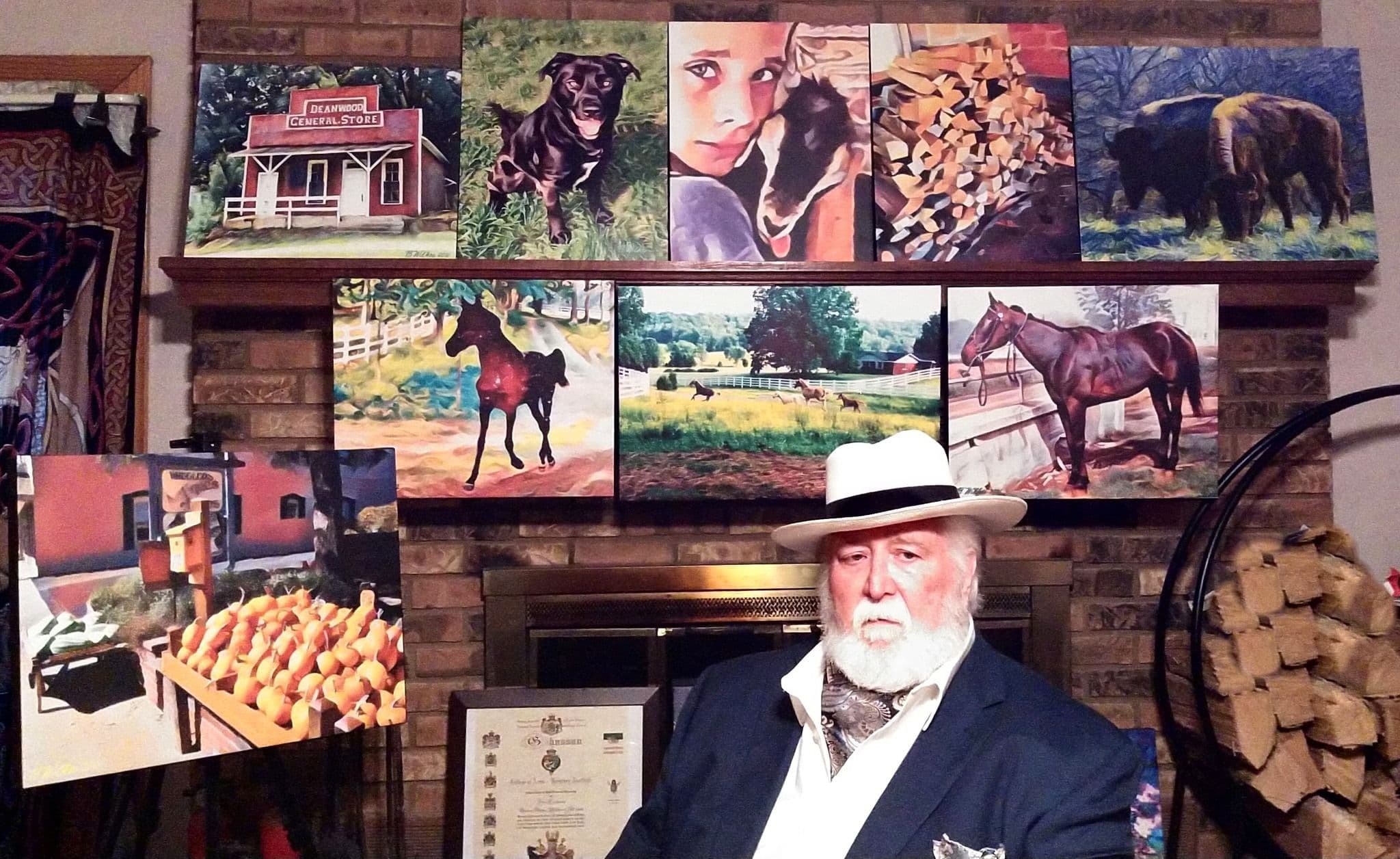
In the quiet corners of rural America, an artistic renaissance is taking place through the work of fine artist Brian Wilkes, whose bold colors and sensitive portrayals are changing perceptions about what many coastal elites dismissively call "flyover country."
After a 50-year artistic journey that began with a degree in art education in 1974, Wilkes made the decision at age 68 to return to art as his primary focus. His timing couldn't be more relevant in today's divided cultural landscape, where rural values and traditions often find themselves misunderstood or maligned.
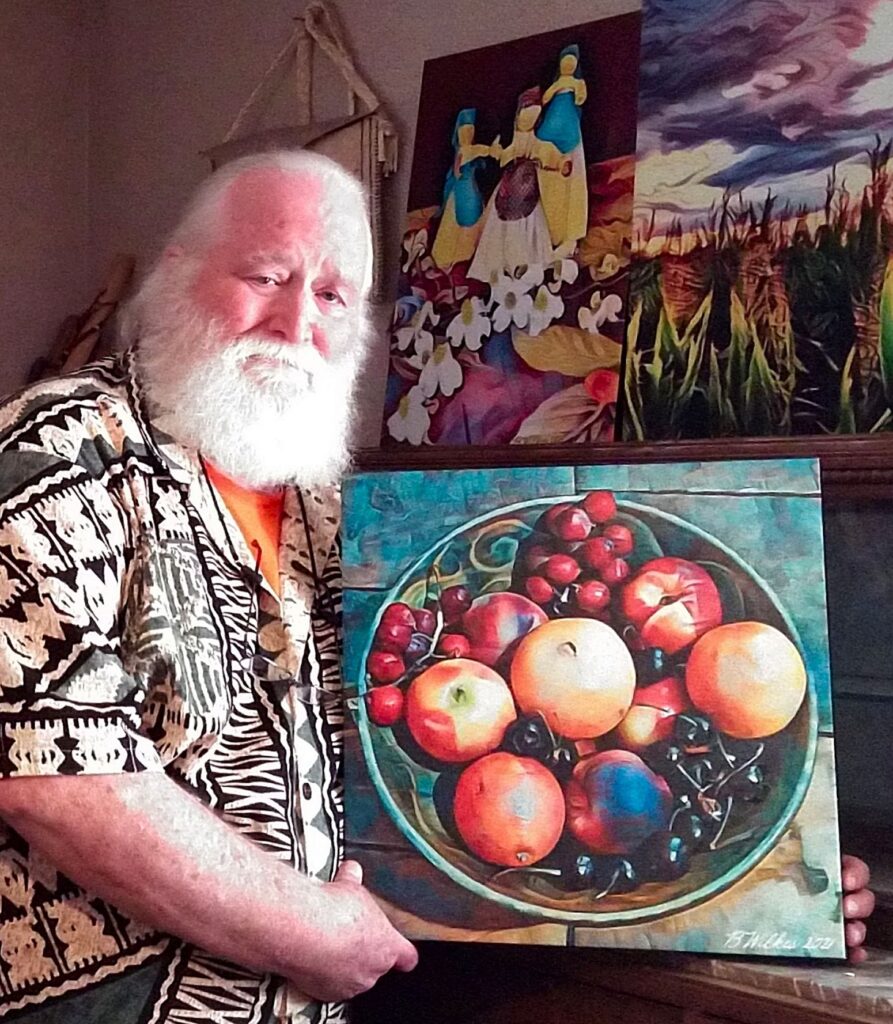
What sets Wilkes apart is his innovative approach called Convergent Media Art, a technique that expertly merges traditional artistic disciplines with cutting-edge technology. This method combines drawing, painting, photography, printmaking, silkscreen, and lithography with digital manipulation to create multi-layered, textured pieces that have drawn comparisons to Vincent Van Gogh, Marcel Duchamp, Richard Stone, and Thomas Kinkade.
"It's using all manners, disciplines, and technologies from the last 200 years that converge into a finished, multi-layered piece, which is very difficult to do any other way," Wilkes explains. "You'll see a considerable digital influence in my work and also crossing somewhat into artificial intelligence."
His "Country Values" series draws inspiration from Norman Rockwell's 1943 "Four Freedoms" paintings, though with a distinctly contemporary sensibility that also evokes Edward Hopper's mid-20th century American landscapes. Through these works, Wilkes celebrates rural America's contributions to both the nation's food supply and its cultural foundation.
"I try to promote conservative American values without getting partisan," Wilkes says. "I'm trying to do things that celebrate rural America, and just kind of remind people: Here's where your food comes from, here's where a lot of our values come from, even though increasingly fewer and fewer of us actually live on a farm anymore."
What makes Wilkes' perspective particularly fascinating is his own lineage, which spans humble agricultural roots and noble heritage. As he describes it, his art examines "ancestral links to the noble families of three continents" while also honoring his Native American ancestry. This unique background allows him to create works that compare "the inherent nobility of farmers and ranchers with the vulnerability of power and royalty."
Beyond his artistic pursuits, Wilkes has made significant contributions to preserving Cherokee language and culture, including his role as a translator in the Cherokee Bible Project. His dedication to this cultural preservation earned him an honorary Doctor of Humane Letters degree from Wolsey Hall Theological School in Oxford, England, in 2015.
Wilkes' artistic philosophy is perhaps best captured in his statement: "Family is everything, but everything is family." This perspective extends beyond human relationships to embrace what he describes as spiritual kinship with the animal, plant, and mineral kingdoms. "According to tradition, I descend from an eagle, a wolf, a bear, a dragon, and a mermaid. These stories cause us to reconsider who and what we call family."
For those interested in experiencing the textural depth and cultural resonance of Wilkes' work, his complete portfolio and artistic journey can be explored at BrianWilkes.art, where rural American values and noble heritage converge in a celebration of family, tradition, and the enduring spirit of the heartland.