

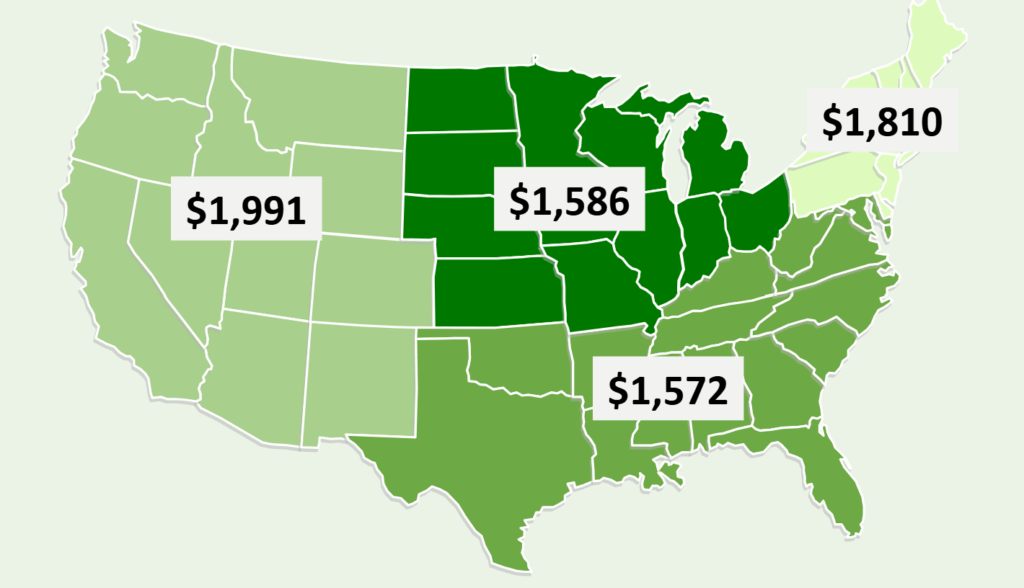
A chance lunch meeting in 2016 between two farmers and their new CPA uncovered a little-known federal tax deduction that has since saved American agricultural landowners millions of dollars. The discovery led to the creation of a specialized service that has completed nearly 6,000 reports across all 50 states, helping farmers and ranchers claim an average of $1,700 per acre in previously untapped tax benefits.
Tyler Bruch, a sixth-generation Nebraska farmer, and Bryce Irlbeck, an organic and regenerative producer from Iowa, were initially skeptical when their newly assigned CPA asked if they had ever claimed a "legacy nutrient deduction." Their longtime accountant, who had just retired, had never mentioned such an opportunity. The ensuing conversation revealed a decades-old provision in the tax code that allows landowners to claim deductions for the value of agriculturally necessary nutrients present in their soil at the time they acquired the property.
The retiring CPA explained that while the concept had existed for years as part of broader conservation incentives, clarifying guidance from the IRS in the mid-1990s had made it practically usable. However, he warned that early implementations often relied on minimal scientific documentation, creating what he termed a "cowboy era" of aggressive but poorly supported filings. For large, professionally managed operations, such an approach carried unacceptable risk.
Recognizing both the opportunity and the challenge, Bruch and Irlbeck spent the next 18 months developing a rigorous system that would meet the most conservative standards. They invested heavily in creating a process involving third-party soil sampling, comprehensive data collection, and professional reporting aligned with IRS guidance. The project enlisted PhD soil scientists, tax attorneys, and CPAs with deep agricultural expertise to validate every aspect of the methodology.
Their efforts resulted in the founding of Boa Safra Ag, a company that now provides the technical documentation necessary for eligible landowners to claim these federal income tax deductions. The deductions recognize the baseline nutrient value at acquisition and allow that value to be treated similarly to other depreciable assets under the tax code.
The service applies across various land types including ranchland, row crops, permanent crops, and production timberland. The underlying principle remains consistent: years of agricultural use deplete soil nutrients and erode productive capacity. The deduction acknowledges this reality by allowing landowners to account for the nutrient value present when they first acquired the property, whether through purchase or inheritance.
Paul Gross, owner and developer of Bluebird Retirement Community who owns more than 27,000 acres, has integrated the process into his acquisition strategy. "I would not consider buying so much as an acre of ground without deploying Boa Safra's scientific soil testing process and reporting as a resource. Simply put, there is no greater ROI that you will ever realize on your purchase," Gross stated.
The company's conservative approach has yielded impressive results. With an average service cost of approximately $40 per acre, landowners typically realize deductions of about $1,700 per acre. This return on investment has attracted attention from institutional buyers and large-scale operators who now routinely incorporate the assessment into their land acquisition procedures.
Audit risk, a primary concern for many landowners and their advisors, appears minimal based on the company's track record. According to the firm, fewer than 10 clients out of nearly 5,000 have undergone audits related to these filings, with all resulting in no-change rulings on the company's work.
The process involves comprehensive data collection and analytics to establish nutrient valuation as of the title transfer date. The resulting report, aligned with IRS guidance, provides CPAs with the documentation needed to file confidently. The deduction can be claimed through several pathways in the tax code, depending on the landowner's structure and the property's history, but it remains a one-time benefit per owner tied to a single assessment.
What began as a solution to a personal challenge has evolved into a nationally recognized service. Boa Safra Ag has established itself as the premier provider of what the company terms Legacy Nutrient Deductions™, operating across every state and serving diverse agricultural operations.
The founders maintain that their success stems from addressing a fundamental problem in the industry. Rather than accepting the status quo of thin documentation and elevated risk, they created a standardized, scientifically rigorous approach that conservative advisors could trust. In an industry where word travels quickly about effective solutions, their client base has grown entirely through referrals from satisfied landowners and their CPAs.
For American farmers and ranchers facing ongoing economic pressures, the discovery of this overlooked deduction represents a significant financial opportunity. As more landowners become aware of the benefit and the availability of professional services to access it safely, the impact on agricultural economics could be substantial. The story that began with a skeptical lunch meeting has become a case study in how proper documentation and conservative standards can unlock legitimate tax benefits that have long remained underutilized.