

TAMPA — Hillsborough County’s dengue fever outbreak has grown to the point where county mosquito officials say they need outside agencies, more aircraft and treatment across a far larger area — potentially the whole county — to keep pace with new cases.
“Based on the cases that we’ve been receiving, growing at a rapid pace, and based on the resources that we currently have right now, we need to effectively cover the whole entire county when it comes to treatment-wise,” Eric Long, operations superintendent for Hillsborough County Mosquito Management Services, told Tampa Bay 28.
County Administrator Bonnie Wise on Thursday extended Hillsborough’s local state of emergency through Oct. 8. The extension order says confirmed dengue cases in the county climbed from 134 as of Sept. 17 to 230 as of Sept. 30. The declaration doesn’t restrict residents the way hurricane orders do; officials say it frees up money and makes it easier to bring in outside crews, equipment and aircraft.
“Just to put it plainly, it just gives us an opportunity to ask for more resources to combat this issue that we’re dealing with right now,” Long said.
Who’s flying in to help
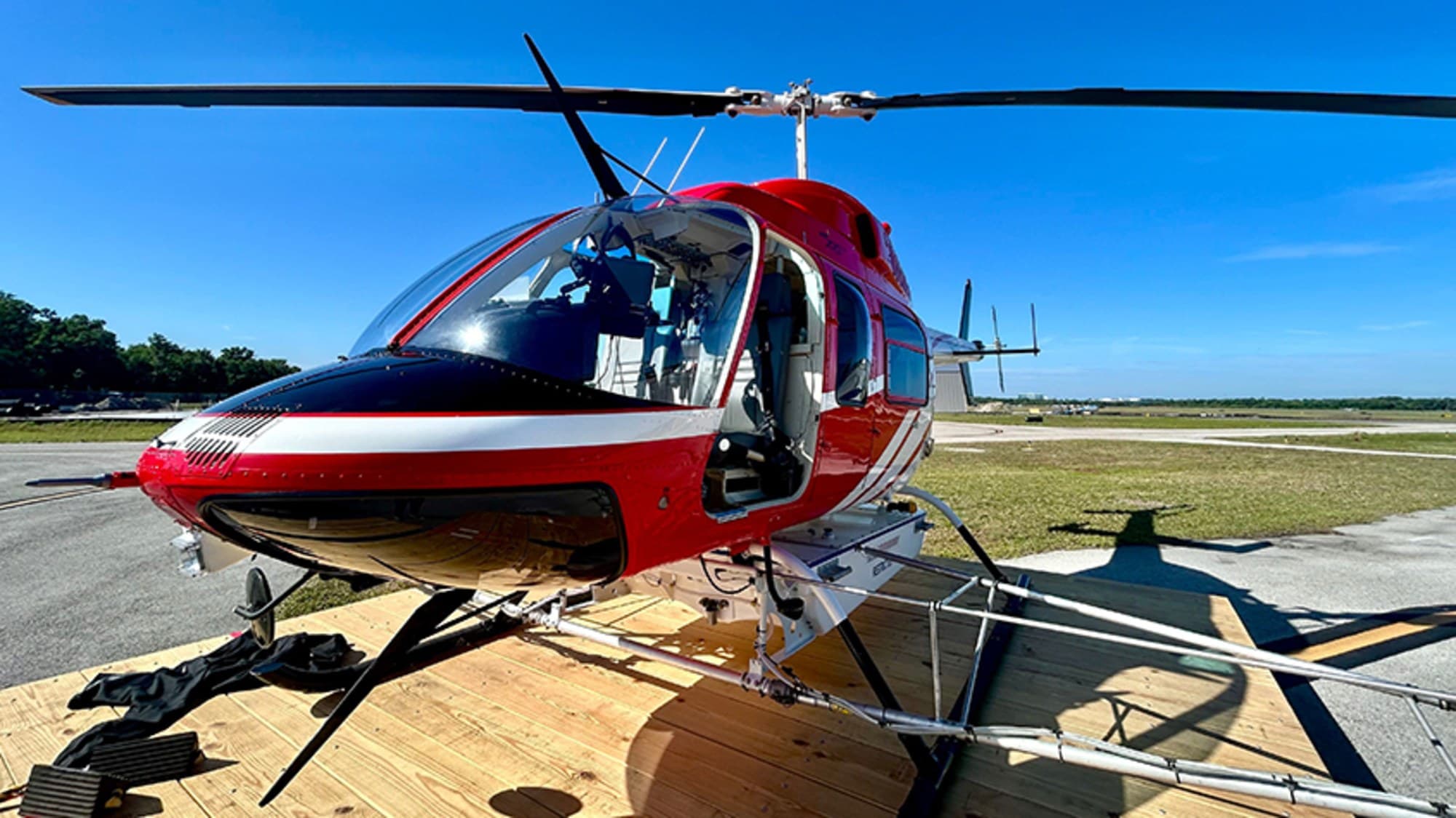
Residents may already have noticed mosquito-control helicopters that don’t belong to Hillsborough. The biggest new piece is the Lee County Mosquito Control District, which brought four helicopters to Hillsborough on Wednesday, each able to carry up to 200 gallons of product per round trip. We reported Wednesday when Lee’s crews first staged at Tampa Executive Airport.
“The mosquito controls actually join forces because mosquitoes don’t know boundaries,” Lee County Mosquito Control communications director Jenifer McBride told WUSF. Lee pilot Gehard Geertsema said his home county is “pretty stable” right now and has spare resources: “It’s nice to come and help with that.”
Lee isn’t alone. Earlier in September, Hillsborough signed first-ever agreements with Manatee and Pasco counties for extra helicopters, trained pilots and specialized aerial support, so the county’s own pilots could rest during an around-the-clock response. Long said more agencies have offered help since then. Asked whether residents could see even more aircraft, he said: “More than likely, probably yes.”
Where the helicopters are going
Crews are hitting mosquitoes at two life stages. Daytime flights drop liquid Bti, a biological larvicide that mimics rainfall so droplets land in buckets, flower pots, toys, bird baths, tarps and gutters in backyards trucks can’t reach from the street. Night flights spray Dibrom to kill adult mosquitoes.
- Daytime larvicide: East Lake, Riverview and Bloomingdale earlier this week, with Lee County and a county contractor flying the missions.
- Wednesday night: waterways in and around Palmetto Beach, the Channel District, Water Street and Palm River, Bay News 9 reported.
- Thursday night: Dibrom by helicopter from 7:30 p.m. to 6 a.m. over South Tampa (I-275 south to Gandy Boulevard) plus Davis Islands and Harbour Island, at 150 feet. The county listed Friday and Saturday, Oct. 3, as weather backup nights.
“This has been our main kind of epicenter, and unfortunately, we continue to need to treat it because we are still getting breeding and positive cases,” Gabriela Henderson of Hillsborough County Mosquito Management told Bay News 9. She told WUSF both daytime and nighttime products are EPA-approved.
Early sign, but no end date
There is one hopeful signal. Long said the latest mosquito samples pulled from spots where dengue had previously turned up all came back negative. But one week isn’t enough, he said.
“With a couple of weeks of those same samples coming back negative, then we can comfortably say that this particular area is rid of this virus at this time,” Long said. Officials also want to see human cases fall before they scale back.
Human cases are still climbing. Hillsborough’s count rose by 53 to 223 in the state’s latest weekly arbovirus report covering Sept. 20–26, WUSF reported, and one dengue death was confirmed in the county last month. Pinellas had 13 cases and Pasco three; both counties are also under local states of emergency, and Pinellas has extended its order through Oct. 8.
What to do: Drain and Cover
Dengue spreads through the Aedes aegypti mosquito, a daytime biter that breeds in small amounts of standing water close to homes. Officials say backyards are where residents can make the biggest difference.
- Drain standing water at least once a week from buckets, flower pots and saucers, toys, bird baths, tarps, gutters, pet bowls and anything else that collects rain.
- Get rid of old tires, which county officials call the biggest culprit. Unincorporated Hillsborough residents can drop off up to 12 tires a year free at the county’s five Solid Waste collection sites; Tampa, Plant City and Temple Terrace residents should check with their city. Pinellas is waiving residential tire fees through Oct. 30.
- Cover your skin with light-colored long sleeves, pants and closed-toe shoes, and use an EPA-registered repellent with DEET, picaridin, IR3535 or oil of lemon eucalyptus.
- Cover openings: keep window and door screens repaired so mosquitoes stay outside.
- Know when they’re spraying: check the county’s mosquito spraying map and sign up for neighborhood alerts on the Mosquito Operations page, or call Mosquito Management at (813) 635-5400.
- See a doctor if you develop a sudden high fever with severe headache, eye pain, or muscle and joint pain, and tell them about mosquito bites. The Florida Department of Health tracks cases statewide.