
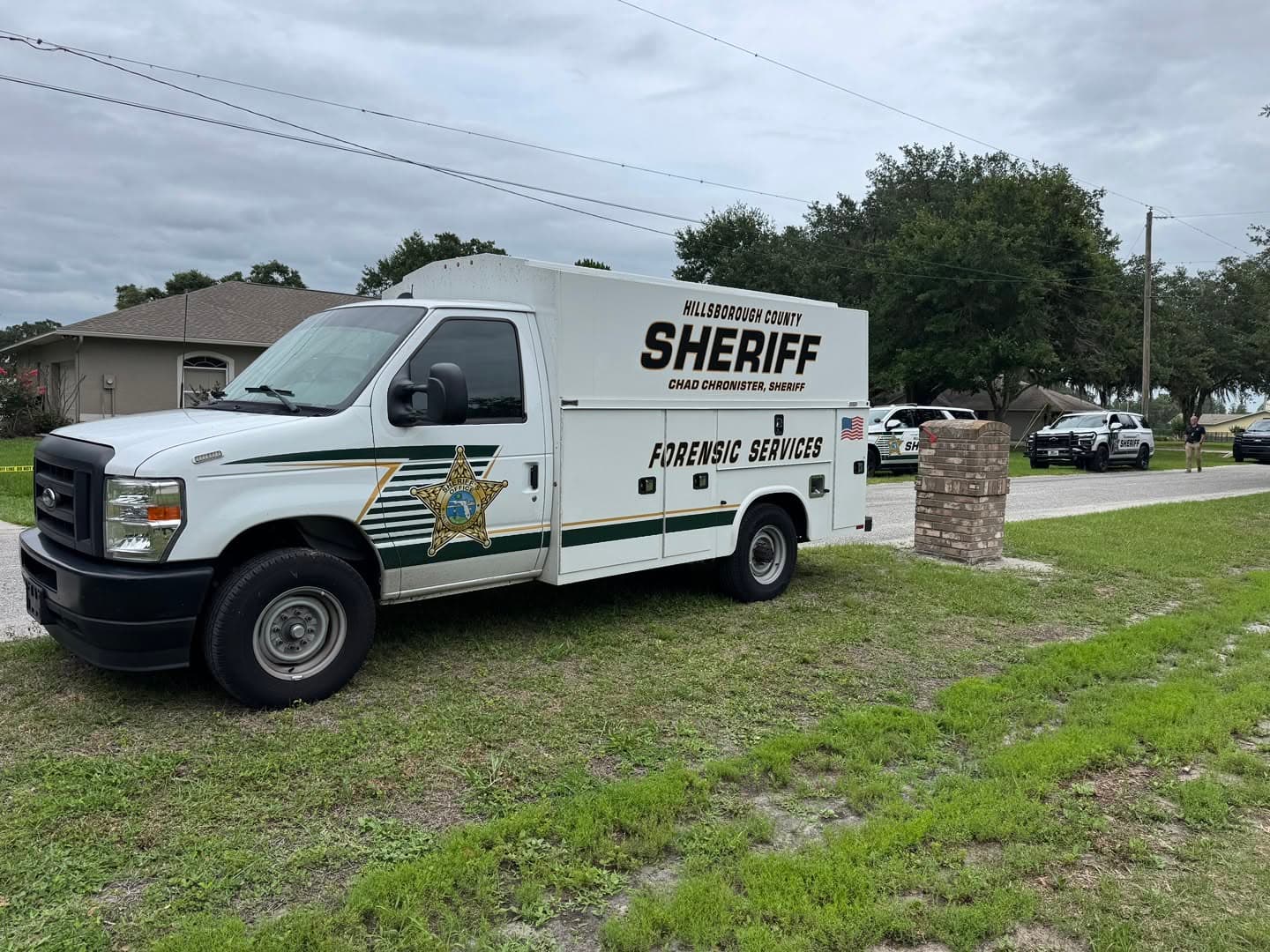
The Hillsborough County Sheriff's Office (HCSO) Cold Case Unit has identified three previously unidentified men in separate cases dating back to 2005, 2011 and 2012.
With help from the Hillsborough County Medical Examiner's Office and forensic genetic genealogy experts, investigators used DNA technology and forensic genealogy to provide answers to families connected to the cold cases.
Cold cases solved by HCSO Cold Case Unit
In 2005, deputies responded to American Used Truck Parts in Tampa on Sept. 23 after a deceased male was discovered inside the sleeper compartment of a tractor-trailer. The body was in an advanced state of decomposition, and HCSO said investigators were unable to identify him at the time despite extensive investigative efforts.
The HCSO Cold Case Unit reopened the investigation in 2025, and on July 15, 2026, laboratory testing confirmed the remains belonged to William Lewis Crummey. HCSO said family members confirmed Crummey had not been heard from since early 2005.
In 2011, deputies responded to Highland Manor Drive and North Klaneburg Road on Feb. 7 after a 911 call reported a deceased male in a wooded area. At the time, HCSO said the Medical Examiner's Office determined the cause of death was natural and investigators were unable to determine the man's identity.
The HCSO Cold Case Unit reopened the case in 2025 and identified the deceased as William McClain on May 27, 2026.
In 2012, deputies responded to a wooded area near the northwest corner of Bassa Street and North Street in Wimauma after a partially decomposed male was discovered. HCSO said investigators were unable to identify the man at the time.
The HCSO Cold Case Unit reopened the case in 2025 and developed a DNA profile, but no matches were found. Othram Labs later conducted forensic genetic genealogy testing, and in June 2026, HCSO received a DNA sample from family members.
On June 1, 2026, laboratory testing confirmed the deceased was Cartis Jackson, who was born in Georgia in 1946 and moved to Florida as an infant. HCSO said Jackson had been separated from his family since 2005.
"Part of our mission is preserving the dignity of everyone in this community, including those who can no longer speak for themselves. These identifications mean three men who were once nameless now have their identities restored, and their families finally have the closure they have waited years for," Sheriff Chad Chronister said in a press release. "I want to thank our Cold Case Unit, the Hillsborough County Medical Examiner's Office, and our partners at Othram Labs for their persistence and dedication to this work."
HCSO said these identifications highlight the impact of modern forensic science and the department's commitment to resolving cold cases and providing answers to families.