

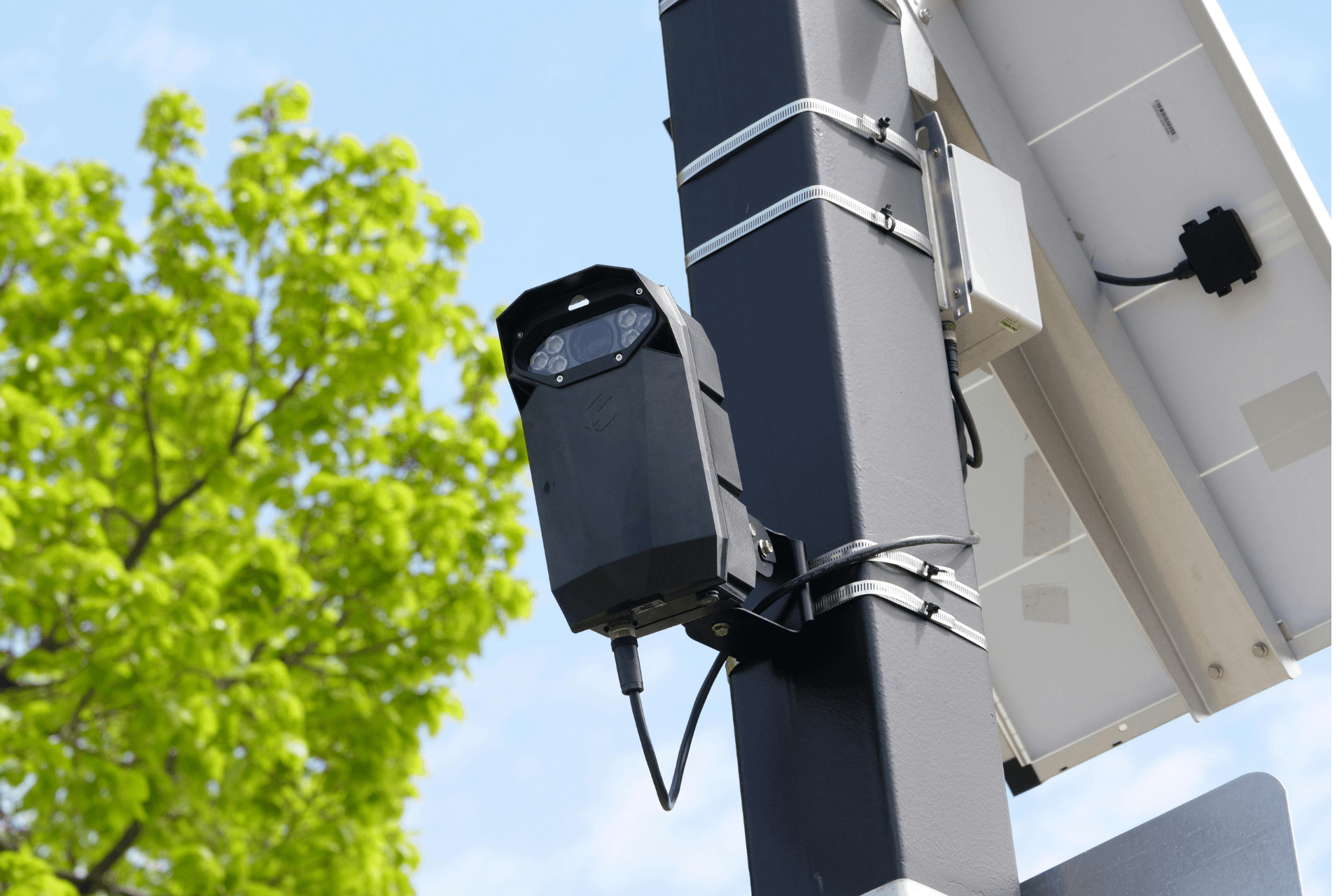
Flock cameras have become a center of debate between public safety efforts and privacy concerns, with protests taking place across the country, including in Tampa Bay.
Flock cameras provide vehicle-related information to assist communities and law enforcement agencies. According to Flock Safety, the cameras capture specific vehicle information as vehicles pass through a designated location, including license plate numbers, vehicle make, model, color and body type, along with the date, time and general location of the detection.
In 2025, Flock Safety said its technology helped locate more than 10,000 missing people through partnerships with more than 700 law enforcement agencies.
As more Flock cameras are installed, some residents have raised concerns that the technology could violate privacy rights and create more harm than good.
One St. Petersburg resident has been protesting the cameras for the past three weekends, arguing the technology violates constitutional protections.
“I want the people to know that these are watching us as law-abiding citizens. The Constitution protects us from this. It says it right in there, but our government has forgot to read it,” Gunn told 10 Tampa Bay.
Gunn argues the cameras represent government overreach. He told 10 Tampa Bay that the technology allows the government to monitor the movements of law-abiding citizens.
Another concern Gunn has raised is how long vehicle data is stored and who has access to that information.
Local media outlets, including Fox 13, reported that the St. Petersburg Police Department uses about 50 Flock cameras throughout the city.
The Pinellas County Sheriff’s Office (PCSO) said the agency uses license plate recognition systems and other technology resources while protecting individual rights and privacy.
“The Pinellas County Sheriff’s Offices uses various license plate recognition systems, as we do other technology resources. We use all of these systems in a manner that protects individual rights and privacy. Under current Florida law, all information contained in license plate recognition systems is confidential and can only be released for specific law enforcement purposes,” PCSO said in a written statement. “License plate recognition systems identify stolen cars, people with outstanding arrest warrants, and help solve crimes like rapes and murders. We responsibly use license plate recognition systems for effective public safety.”
During a monthly Plant City Commission meeting in August, a resident raised concerns about privacy and the use of license plate readers in the community.
Ms. M said residents cannot travel in and out of Plant City without being tracked.
“There’s a ton of these automatic license plate readers that are a part of the beast system,” Ms. M said.
She said Plant City should consider using its own security measures instead of participating in the Flock camera system to ensure information is not shared with outside entities.
Plant City has been using Flock cameras e since 2024. When the system was introduced, the Plant City Police Department said the technology would help officers identify vehicles connected to criminal investigations.
“Unfortunately, a lot of times when a crime occurs—it happens in the moment—people see fractions of what is actually going on,” said PCPD Captain Robert McLellan during a 2024 presentation to the City Commission. “So, a lot of times, when they see a vehicle they say, ‘It is a blue two door, and it had a bumper sticker.’ Before, we would be looking for millions of vehicles. Now with this technology, we can put information in and narrow it down, and make out what the vehicle is.”
As more communities consider expanding the use of Flock cameras, the debate over balancing public safety with personal privacy continues.
Law enforcement agencies argue the technology provides an additional tool to investigate crimes, recover stolen vehicles and locate missing people. However, some residents say more transparency is needed regarding how data is collected, stored and accessed.
As cities across Tampa Bay continue evaluating the use of license plate recognition technology, officials and residents will continue to weigh the benefits of increased security against concerns surrounding privacy and government surveillance.